

You saw the word “encrypted” pop up on your phone. Your first thought was probably: what does that even mean? You’re not alone. Millions of people ask what does encrypted message mean every single day.
This guide breaks down what does it mean when a message is encrypted, what does encrypted mean on text messages, and what does encrypted mean on messages across WhatsApp, iPhone, Android, and more. No tech jargon. Just clear, simple answers.
What Does Encrypted Message Mean?
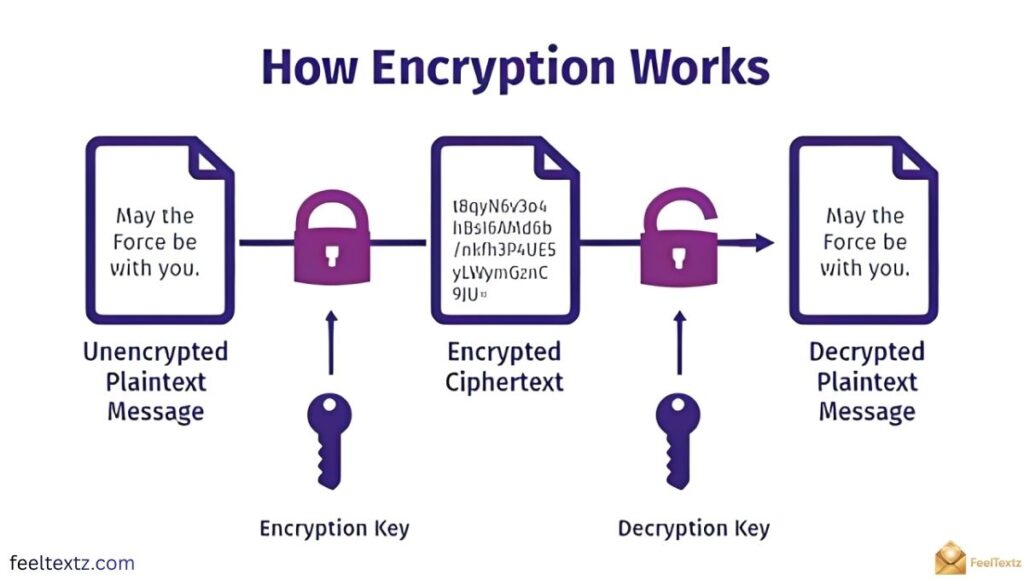
An encrypted message is text that has been scrambled into unreadable code before it leaves your phone. Only the person you’re sending it to has the key to unscramble it and read it. This is what does encrypted message mean in the simplest sense, it’s a locked message that only the right person can open.
The process relies on encryption keys, which act like a digital lock and matching key. Your phone locks the message, and only the receiving device holds the matching key to unlock it again.
What Does It Mean When a Message Is Encrypted?
When a message is encrypted, it goes through a process called encryption, where cipher algorithms convert your readable text into ciphertext, a jumbled string of data that means nothing to anyone who intercepts it. Even if someone hacks the network, all they see is gibberish.
This is different from a normal, unprotected text. An unencrypted message travels in plain, readable form, which means it could technically be viewed by outside parties along the way.
What Does Encrypted Mean on Text Messages?
On your phone, an encrypted text message usually means the app is using end-to-end encryption to protect your conversation. This applies to regular texts, group chats, photos, and sometimes calls too.
You’ll often see a small label, icon, or notice saying a chat is encrypted. That’s simply the app confirming your conversation is protected and private between you and the recipient.
How Does Encrypted Messaging Actually Work?
Encrypted messaging apps use cryptographic protocols to protect your data from the moment you hit send. The most common approach is end-to-end encryption (E2EE), where messages are locked on your device and only unlocked on the recipient’s device.
Some apps rely on the Signal Protocol, while newer enterprise tools use Messaging Layer Security (MLS) for large group chats. Both aim to keep your conversations private from everyone, including the app provider itself.
End-to-End Encryption Explained
End-to-end encryption means no one in the middle, not the app company, not your carrier, not a hacker on the network, can read your message. Only the sender and receiver hold the keys.
This directly answers what is end-to-end encryption: it’s a security method that keeps your chats, calls, files, and metadata locked away from anyone except the two people talking.
Encryption Keys and Decryption
Every encrypted chat uses a pair of digital keys. One locks the message (encryption), and the other unlocks it (decryption) on the receiving end. Without the correct key, decryption is practically impossible.
This is also how identity verification works in many apps, matching keys confirm you’re really talking to the right person, not someone impersonating them through a man-in-the-middle attack.
What Does Encrypted Message Mean on Different Apps?
Not every app handles encryption the same way. Some protect every single chat by default, while others only encrypt certain types of messages. Here’s a quick breakdown.
The table below shows how what does encrypted message mean on WhatsApp compares to iPhone, Android, and other popular platforms.
| App/Platform | What “Encrypted” Means | Protection Type |
| All chats and calls are locked by default | End-to-end encryption | |
| iPhone (iMessage) | Blue bubble texts are fully encrypted | End-to-end encryption |
| Android (RCS/Google Messages) | Blue bubble chats are encrypted, green (SMS) is not | End-to-end encryption (RCS only) |
| Messenger | Encryption available in “secret conversations” | Optional end-to-end encryption |
| X (Twitter) | Encrypted DMs available for select users | End-to-end encryption (limited) |
What Does Encrypted Message Mean on WhatsApp?
On WhatsApp, every personal chat, group chat, and call is encrypted by default. This means what does encrypted message mean on WhatsApp is simple, no one outside your conversation, not even WhatsApp itself, can read your messages.
You don’t need to turn anything on. It’s automatic the moment you start chatting with someone.
What Does Encrypted Message Mean on iPhone?
On an iPhone, encrypted usually refers to iMessage. What does encrypted message mean on iPhone comes down to bubble color, blue bubbles are encrypted through Apple’s system, while green bubbles are regular SMS and are not protected the same way.
What Does Encrypted Message Mean on Android?
On Android, this depends on whether you’re using RCS (Rich Communication Services) or plain SMS. What does encrypted message mean on Android usually means your chat is running through Google Messages with RCS turned on.
- Blue bubble chats on Android = encrypted via RCS
- Green bubble chats = standard SMS, not encrypted
- Group chats need everyone using RCS for full protection
What Does Encrypted Message Mean on iMessage?
What does encrypted message mean on iMessage specifically refers to Apple’s built-in end-to-end encryption. Every iMessage sent between two Apple devices is automatically protected, with no setup required from you.
Common Confusions About Encrypted Messages
A lot of people misread what an encrypted label actually means. It’s easy to assume it signals something negative, like being blocked or ignored, when that’s not the case at all.
Let’s clear up the most common mix-ups people search for.
Does Encrypted Mean Blocked?
No. Does encrypted mean blocked is one of the most searched questions, and the answer is simple, encryption has nothing to do with being blocked. It only means your message is protected and private, not that the other person can’t receive it.
What Does Not Encrypted Mean on Text Messages?
What does not encrypted mean on text messages is the opposite scenario, your message travels in plain, readable form without extra protection. This usually happens with standard SMS texts, especially green bubble messages between iPhone and Android users.
Why Did I Get a Text Saying End-to-End Encrypted Message?
Why did I get a text saying end-to-end encrypted message usually happens when you start a new secure chat, switch apps, or when your messaging app upgrades its security settings. It’s simply a notification confirming your protection is active.
End-to-End Encrypted Message Meaning
End-to-end encrypted message meaning boils down to one thing: privacy by design. The message is locked on your device and only unlocked by the intended recipient, with nobody else able to peek in between.
How to Turn Off Encrypted Messages on iPhone
Some users want to disable iMessage encryption and switch back to standard SMS instead. What does iMessage encrypted mean how to turn off is answered through Apple’s own settings.
- Open Settings, then tap Messages
- Turn off the iMessage toggle
- Your texts will now send as regular SMS instead of encrypted blue bubbles
This is useful if you’re switching phones or want messages to send even with poor internet connection.
SMS vs RCS vs Encrypted Messaging
Not all texting methods offer the same privacy. Regular SMS is old technology with no built-in encryption, while RCS (Rich Communication Services) adds encryption when both people use compatible apps.
- SMS: no encryption, works on any phone
- RCS: encrypted between supported devices, richer media support
- Dedicated apps (WhatsApp, iMessage): full end-to-end encryption by default
Encrypted Messaging Beyond Personal Texts
Businesses take encrypted messaging even further. Enterprise-grade encrypted messaging apps go beyond simple text protection, adding metadata protection, identity verification, and compliance features that personal apps don’t offer.
Platforms like Wire, Element (Matrix), Threema Work, and Nextcloud Talk are built for companies that need stronger safeguards than consumer tools like WhatsApp, MS Teams, or Slack typically provide.
- Metadata protection hides who is talking to whom, not just the message content
- Forward secrecy and post-compromise security refresh encryption keys regularly
- Compliance frameworks like GDPR, NIS2, and DORA push companies toward stronger, EU-hosted encrypted platforms
- Protocols like MLS support secure group-oriented encryption at scale
These tools also guard against real risks like phishing, credential harvesting, business email compromise, and insider threats, problems that stem largely from human error, not weak technology.
Read Also: Your Complete Guide to the GTCH Message Board in 2026
Frequently Asked Questions
What does it mean when someone sends you an encrypted message?
It means your conversation is locked and private. This is what does encrypted message mean in daily use, only you and the sender can read it, no one else.
How do I read encrypted messages?
Just open the app normally. Encrypted messages appear as regular readable text on your screen; the scrambling happens only during transmission, not when you’re viewing it.
Why do my texts say “encrypted”?
Your messaging app is confirming your chat is protected. It’s simply letting you know end-to-end encryption is active for that specific conversation.
Why would someone use encrypted messaging?
People use encrypted messaging to protect private conversations from hackers, data leaks, and outside access. It keeps personal and sensitive information safe from anyone but the intended recipient.
Conclusion
So, what does encrypted message mean? It simply means your conversation is private and protected from prying eyes. Whether it’s an encrypted message on WhatsApp, iPhone, or Android, the goal stays the same, keeping your words between you and the person you’re talking to.
Understanding what does it mean when a message is encrypted helps you feel confident instead of confused next time that label pops up. It’s not a warning sign; it’s a privacy feature working exactly as intended, quietly protecting your everyday conversations.